Petrichor

Sinae Yoo

13.05.2019 – 21.06.2019

Exhibition views

Works

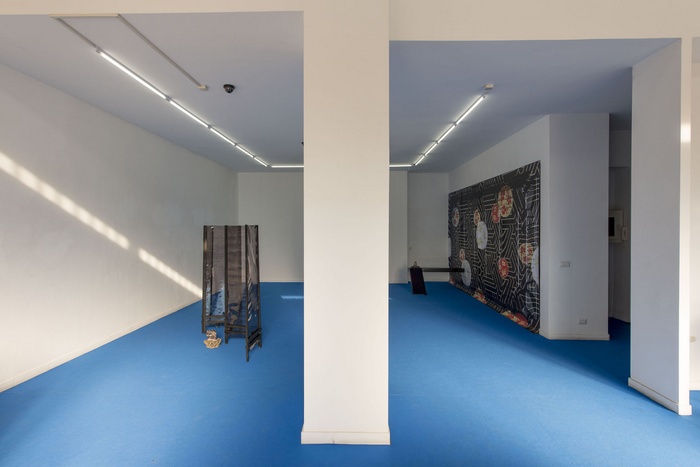
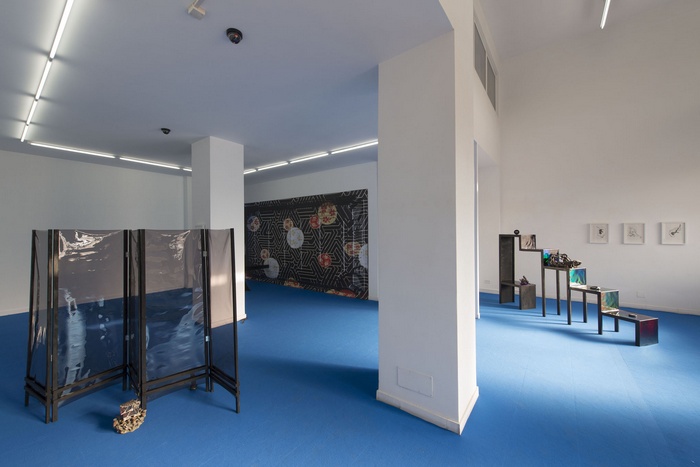
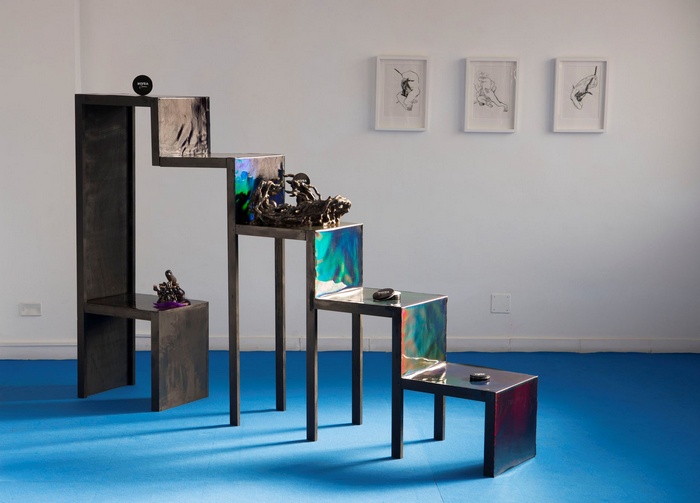
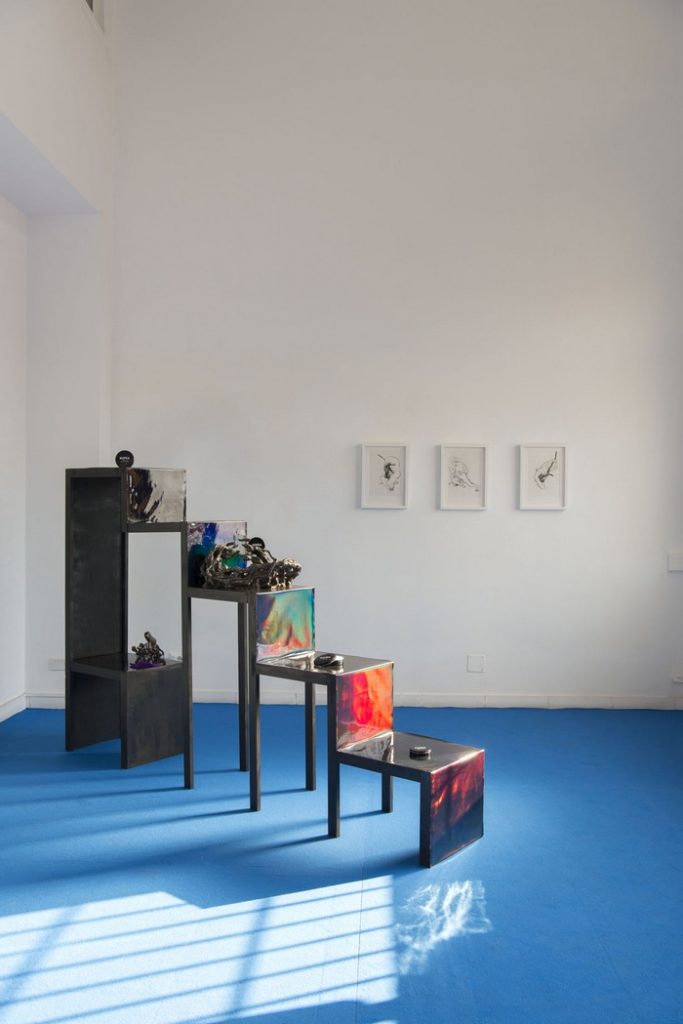
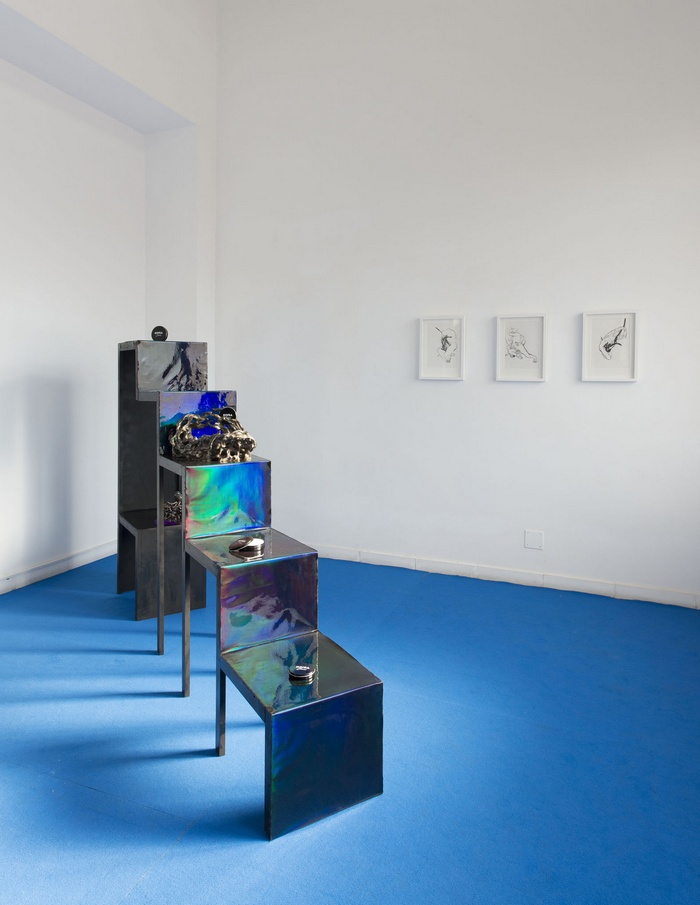
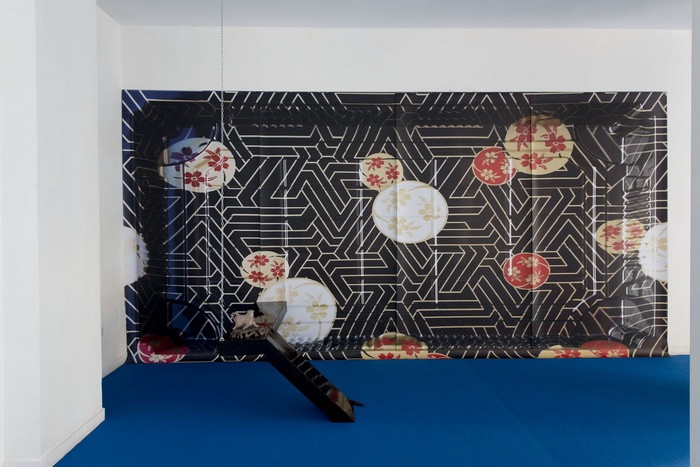
The Gallery Apart is proud to present Petrichor, the second solo show by Sinae Yoo (Seoul, 1985) hosted in the gallery spaces. Exploring the sensory imagery of Sinae Yoo means living a sensory experience of great visual impact and which soon morphs into a meeting with themes, suggestions and requests related to ethical and moral foundations which since ever have compelled human beings to question themselves and the environment where their earthly life unfolds. In the last few years, by exploiting a wide range of media, Sinae Yoo has investigated topics such as estrangement and bondage under the yoke of capitalism. Drawing on the visual culture as a defining part of advertising and video games, the artist evokes an aesthetic form of seduction which ensnares and shatters the souls in its virtual network.
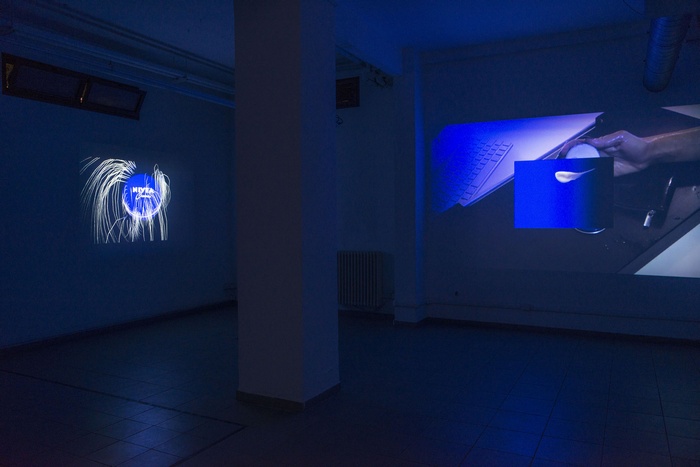
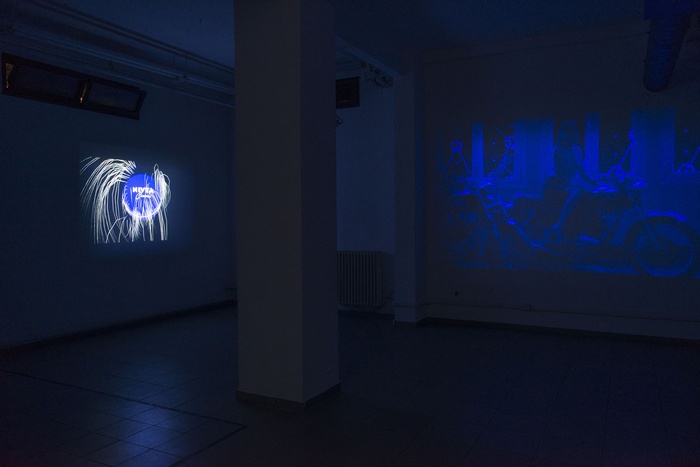
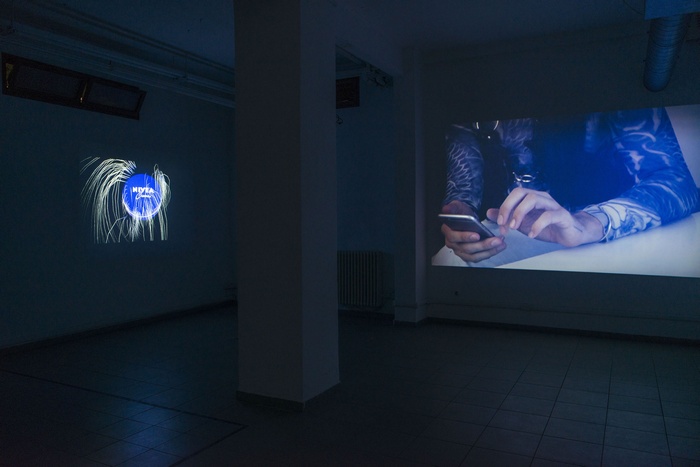
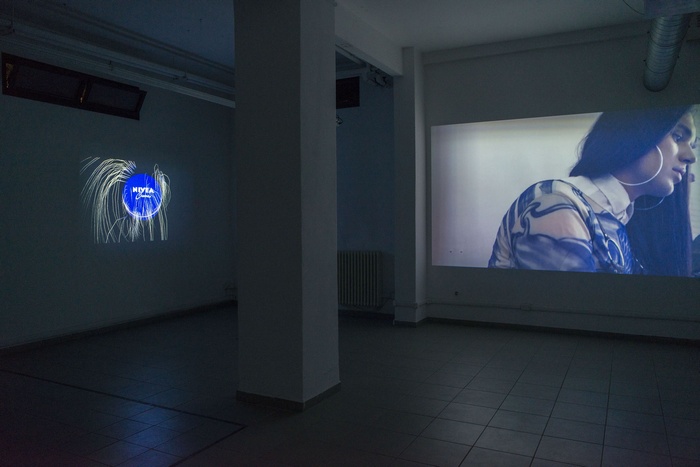
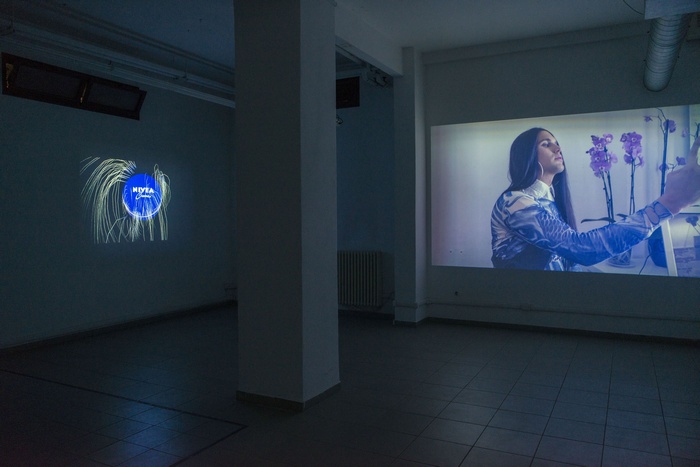
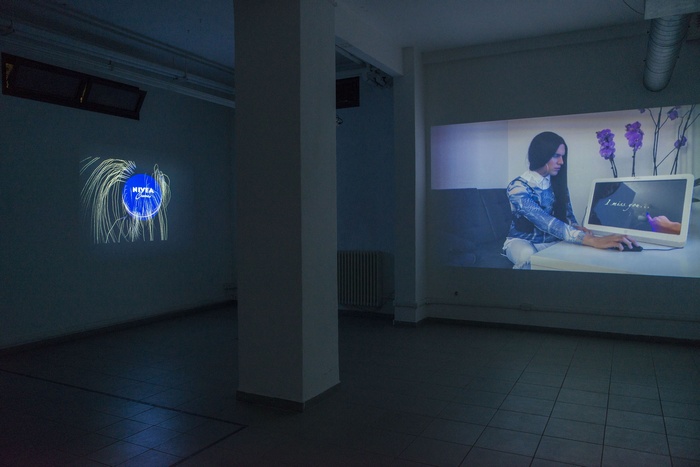
The exhibit unfolds around the video installation that lends its title to the show. Petrichor is a word coined by some scientists during the Sixties to describe the distinct scent when a storm’s first raindrops hit the ground after a long period of dry weather. The video is the result of a close cooperation with a community of artists whom Sinae Yoo met in the city of Baltimore, where the artist lived during the last year and where the video has been shot. The film features Elon Batlle, the composer and singer Mathew Starke, and the poet Keenon Brice, while Alex Deranian and Sylvain Gerboud composed its soundtrack.
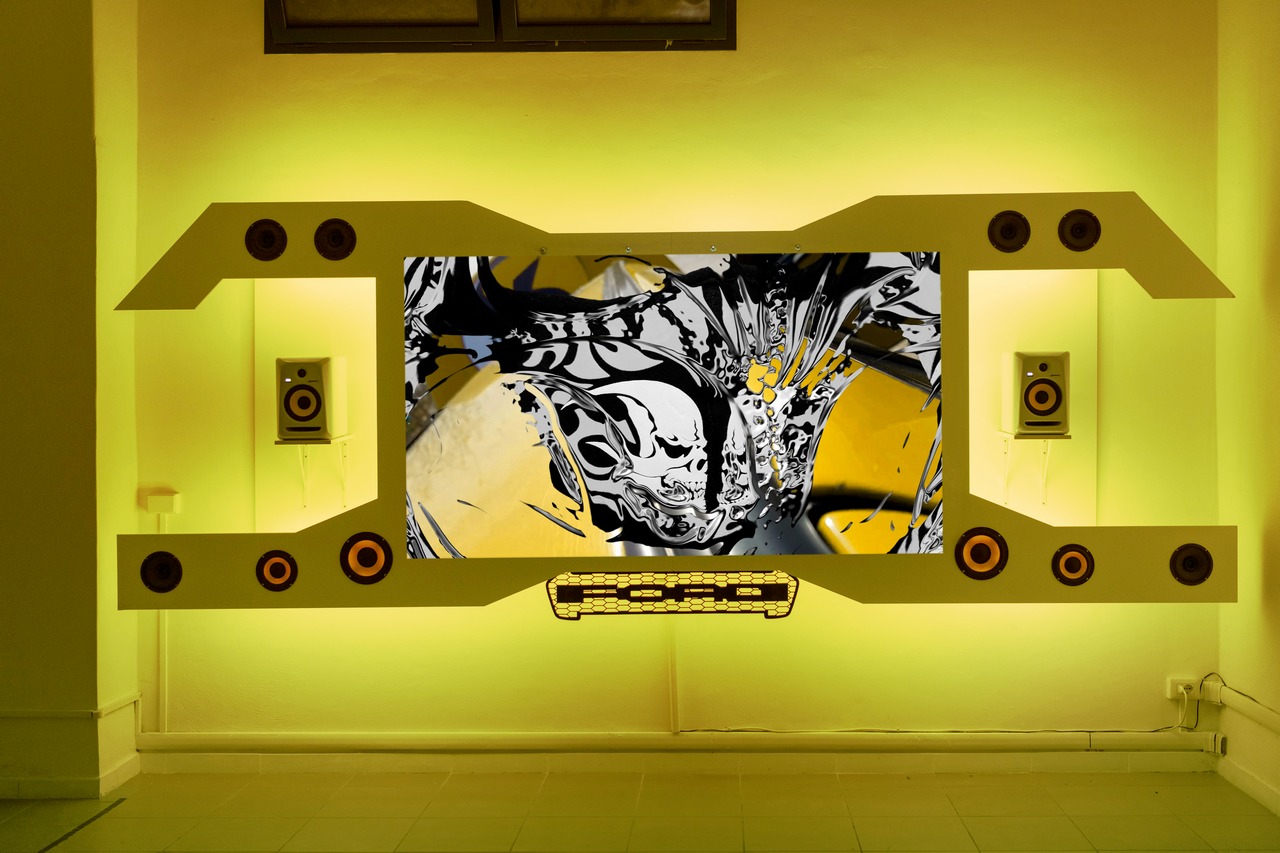
Set in service stations and in car parks, Petrichor revolves around the car as an emblematic object of a regulatory, hyper-masculinized power. A world controlled and inhibited by the lean curves and by the powerful audio system of a muscle car. The artist uses subculture products to investigate the mechanisms which govern personal relationships and the relation with the expressions of the self which, in the capitalist system, are based on forms of extreme competitiveness. Capitalism, in fact, does not promise any salvation or redemption for the weak, but only default and debt, and in art, just like at work, the mainstream exploits and destroys the free subcultures, imposing submission, obedience and conformity to the dominant aesthetic canons.
The protagonists of Petrichor seek to escape this by giving life to scenes where music and drama serve as catalyst for emancipation, resilience and fortitude. The rebellion against the imposed uniformity goes through the exaltation of a space and of shared social practices, of a sociological habitus which here is defined “Glass flex”, a subculture where the affirmation of identity and the social recognition is based on a competition over the biggest in-car audio system, over who has the most powerful subwoofers. The video installation and its score are inspired by such hyper-masculinized aesthetics.
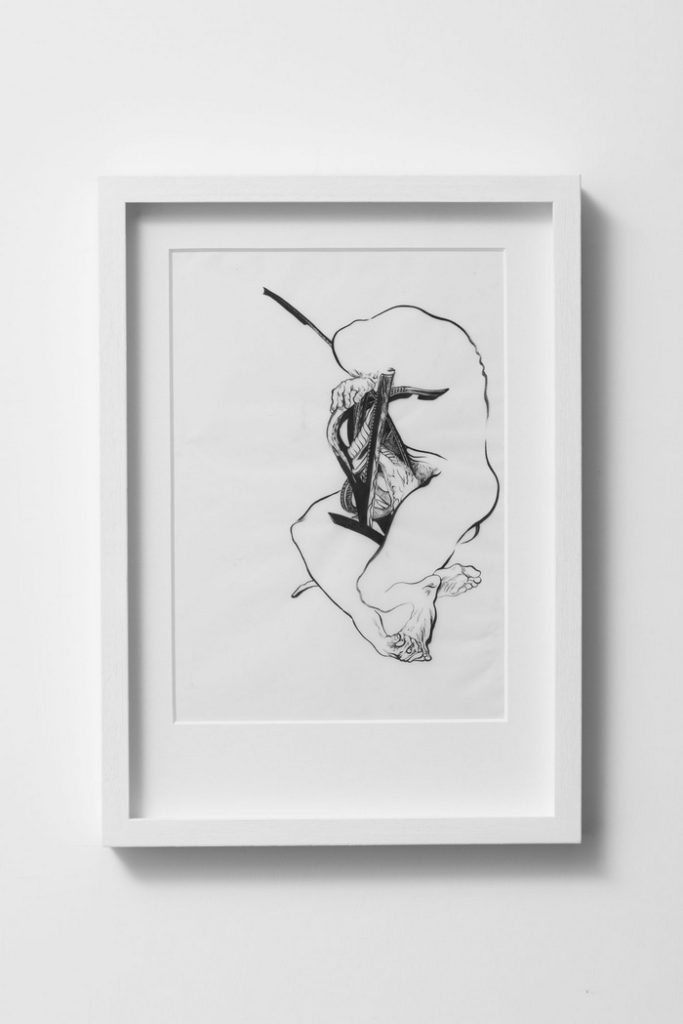
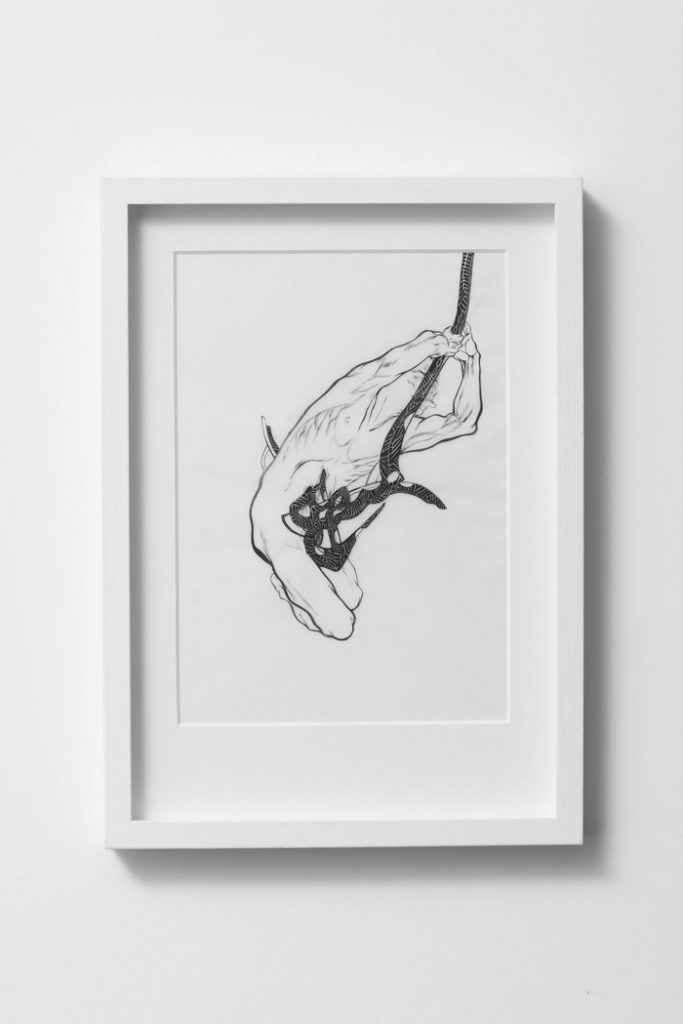
Music plays a key role in the project Petrichor. The song “Shield” borrows the music that, in a stunning detail of the tryptich oil painting “The Garden of Earthly Delights”, housed in the Museo del Prado in Madrid, Hieronymus Bosch painted upon the posterior of one of his innumerable upsetting figures. The result is a completely new song that one of the protagonists featuring in the video sings, which however the spectators cannot hear. The song indeed is played on the upper floor of the gallery where the audience will listen to it while having the big mural work of art in front of them that Sinae Yoo has painted on the highest wall of the gallery, and on which the artist wrote “Inner music can be heard when you close your eyes”. It invites to rediscover the spiritual dimension that the consumerist society tends to reject. The abstract collages featuring the exhibition are inspired by such dimension and by its possible and personal visual representation.

The Gallery Apart è orgogliosa di presentare Petrichor, la seconda personale di Sinae Yoo (Seoul, 1985) negli spazi della galleria. Addentrarsi nell’immaginario di Sinae Yoo significa apprestarsi ad un’esperienza sensoriale dal forte impatto visuale e che presto si trasforma in un incontro con temi, suggestioni e istanze che attengono ad alcuni fondamenti etici e morali che da sempre obbligano il genere umano ad interrogare se stesso e l’ambiente in cui si dipanano le sue vicende terrene. Negli ultimi anni, usando una vasta gamma di media, Sinae Yoo ha esplorato temi quali l’alienazione e la servitù sotto il giogo del capitalismo. Prendendo spunti dalla cultura visiva della pubblicità e dei videogiochi, l’artista evoca un’estetica di seduzione che intrappola e frantuma le anime nella sua rete virtuale.
La mostra si sviluppa intorno all’installazione video che le dà il titolo. Petrichor è un termine coniato in ambito scientifico nel corso degli anni ’60 per indicare l’odore che si manifesta quando una prima pioggia cade dopo un lungo periodo di bel tempo. Il video è il risultato di un processo di stretta collaborazione con una comunità di artisti che Sinae Yoo ha incontrato a Baltimora, città dove l’artista ha risieduto nel corso dell’ultimo anno e dove il video è stato girato. Recitano nel film Elon Batlle, il compositore e cantante Mathew Starke e il poeta Keenon Brice, mentre Alex Deranian e Sylvain Gerboud ne hanno composto la colonna sonora.
Ambientato in stazioni di servizio e parcheggi, Petrichor si concentra sull’automobile come oggetto emblematico di un potere normativo iper-mascolinizzato. Un mondo controllato e inibito dalle curve slanciate e dal potente sistema audio di una muscle car. Si tratta di sottoprodotti culturali che l’artista utilizza per indagare i meccanismi che presiedono alle relazioni interpersonali e al rapporto con le espressioni del sé che nel sistema capitalistico sono improntate a forme di estrema competitività. Il capitalismo infatti non promette salvezza e redenzione per i deboli, ma solo default e debito e nell’arte, come nel lavoro, il mainstream sfrutta e distrugge le sottoculture libere imponendo sottomissione, obbedienza e conformità ai canoni estetici dominanti.
I protagonisti di Petrichor tentano di sfuggire a tutto ciò dando vita a scenari in cui musica e teatralità fungono da catalizzatori per l’emancipazione, la resilienza e la forza d’animo. La ribellione all’uniformità imposta transita per l’esaltazione di uno spazio e di pratiche sociali condivise, di un habitus in senso sociologico che qui assume la denominazione di “Glass flex”, una sottocultura in cui l’affermazione identitaria e sociale è affidata a una gara a chi costruisce i sistemi audio per automobili più smisurati, a chi detiene i subwoofers più potenti. E’ a questa estetica ipermascolinizzata che si ispirano l’installazione video e la colonna sonora.
La musica gioca un ruolo fondamentale nell’ambito del progetto Petrichor. La canzone “Shield” prende a prestito le note musicali che, in uno straordinario particolare del Trittico del Giardino delle delizie, conservato al Museo del Prado di Madrid, Hieronymus Bosch dipinge sul sedere di una delle sue infinite inquietanti figure. Ne è derivata una canzone completamente nuova che uno dei protagonisti del video canta senza che però lo spettatore la possa sentire. La canzone in effetti viene diffusa al piano di sopra della galleria dove lo spettatore la ascolterà avendo negli occhi il grande murale che Sinae Yoo ha dipinto sulla parete più alta della galleria e in cui ha inserito la frase “La musica interiore può essere ascoltata quando chiudi gli occhi”. E’ un invito a recuperare la dimensione spirituale che la società materialista tende ad espellere ed è a questa dimensione e alla sua possibile e personale rappresentazione visuale che si ispirano i collages astratti che completano la mostra.

all photos by Giorgio Benni
Shadow rift

Sinae Yoo

curated by Domenico de Chirico

13.12.2016 – 11.02.2017

Exhibition Views

Works


The Gallery Apart is pleased to announce Shadow riftSinae Yoo’s first exhibition at the gallery, curated by Domenico de Chirico.

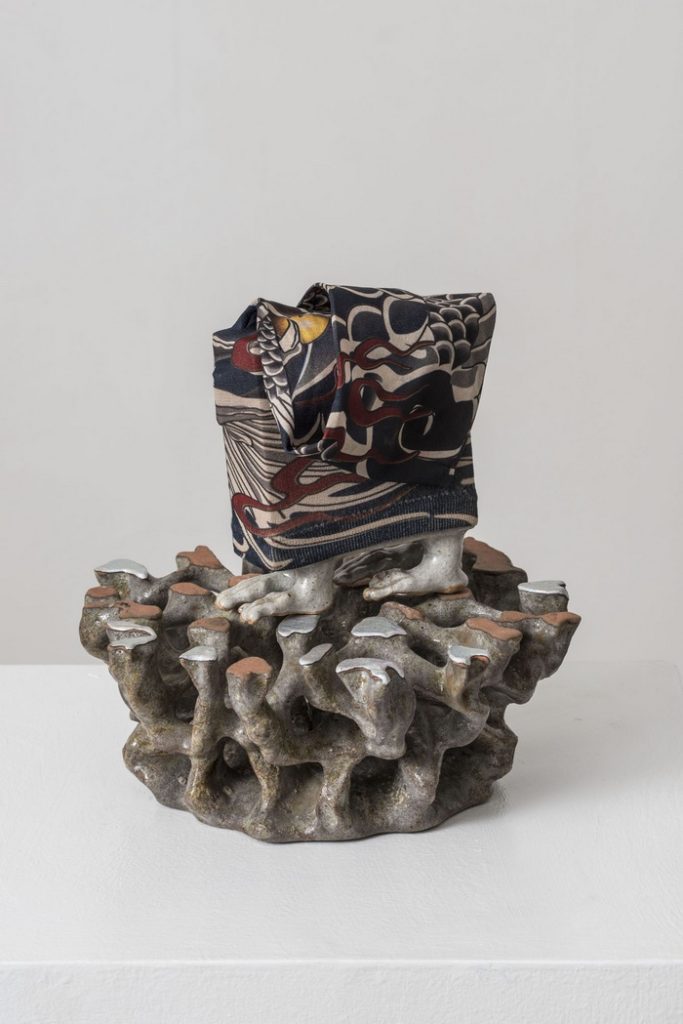
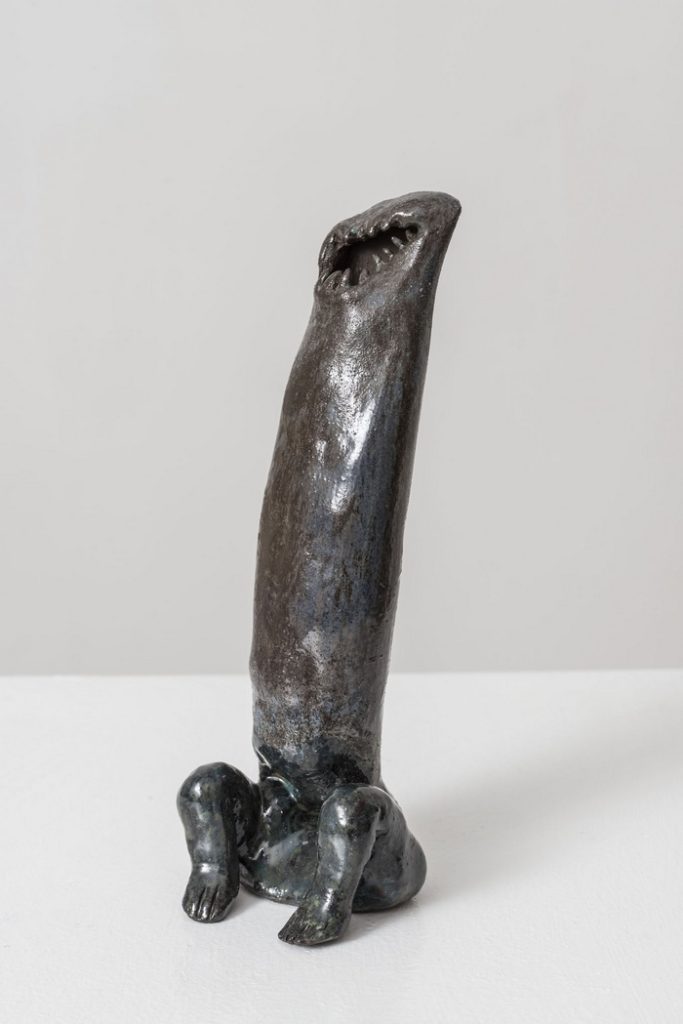
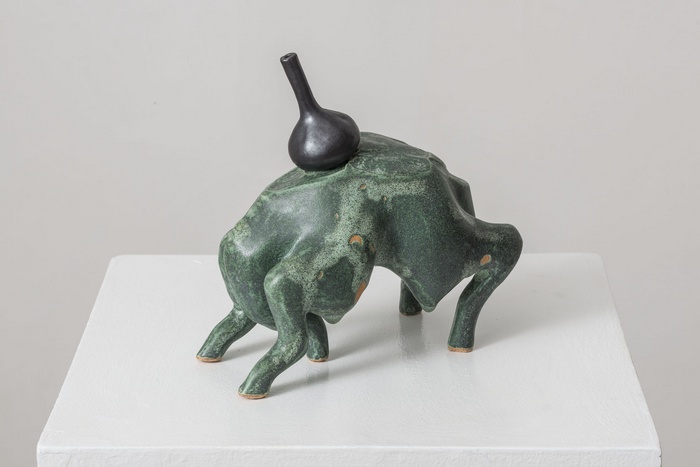
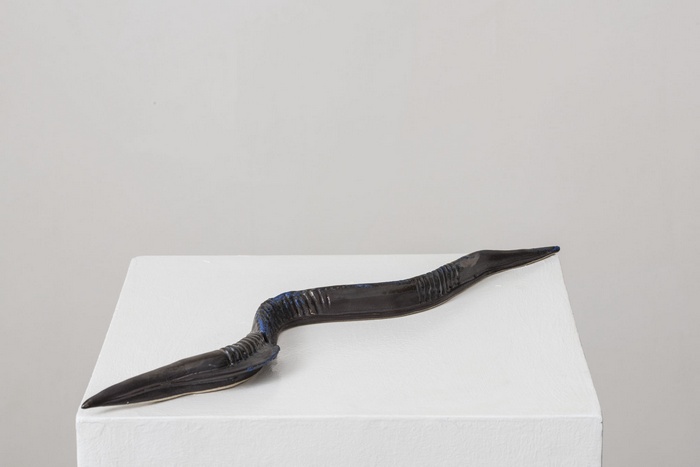
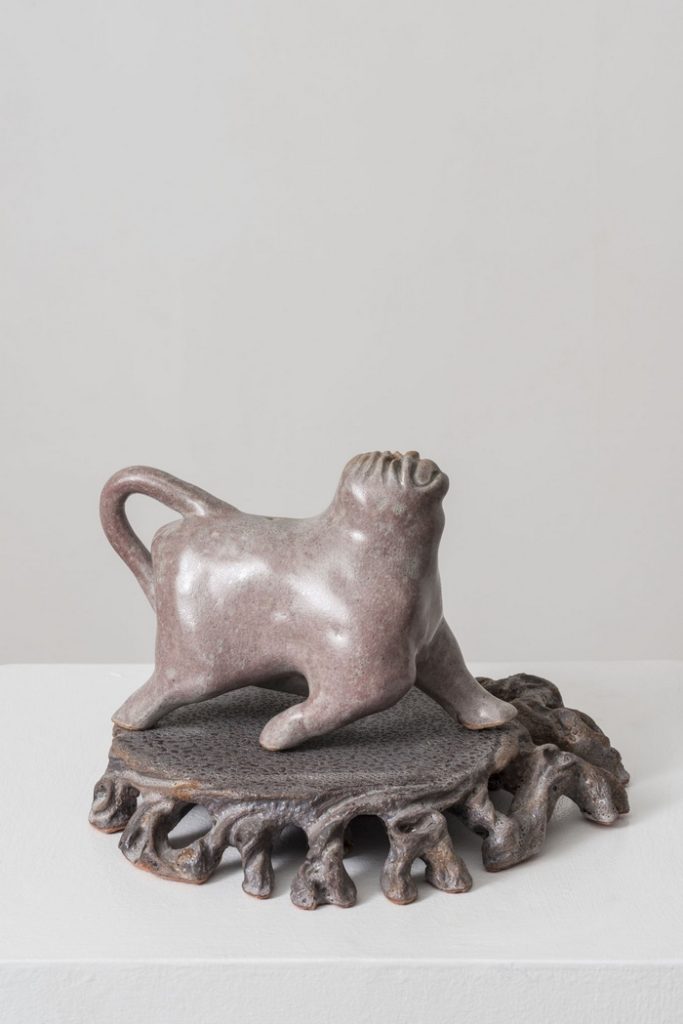
Vivid free interpretation of situations, objects, figures and a complex sign language in pop culture and extended cultural exchanges as they move through historical motifs and compositions, posing notions of an expressive self, this is the general starting point for the artistic work of Korean artist Sinae Yoo (*1985). Currently living in Switzerland, for her first solo exhibition in Italy at The Gallery Apart in Rome, she has produced a large new work series, including: a video accompanied by the soundtrack, installations, drawings and ceramics.

In ‘Shadow rift’, Sinae Yoo seeks to deconstruct the privileged sense of the Western theoria: the sight. Seeing does not mean exclusively seeing, as each gaze needs a concealment. This typically Deriddan practice implies that the reflection upon the sight, upon the vision, upon the gaze and the eye, intertwines inextricably with the touch: «If two gazes look into each other’s eyes, can we say that in that right moment they are touching each other?».

Vision and touch, distance and proximity interlace like a chiasm and the con-tact of the eyes is given as a condition, so that the look and the encounter with the other occur contemporaneously. The essence of this discourse is unquestionably ethical: Sinae Yoo investigates the mode of being and the ability to deal with the other. Such ocular theory results, so to speak, in a technological impasse: the vision becomes tact and the sight becomes contact. Therefore, the relationship with the other deconstructs the movement between proximity and distance, their presumed duality and their nitid separation. In the extreme vicinity the eye cannot see anymore, points and touches like a finger and so ultimately, its function becomes digital, no longer optic but haptic (i.e., tactile object recognition). The aim is to highlight a new relationship, built and realized through the sight and by opening the eyes to the world. To quote the French philosopher Jean-Luc Nancy, « we have to touch without touching, that is to know how to touch without touching, without touching too much ».

Within the exhibition, rich in synaesthesia, the reflection on the look becomes also a question of identity which takes concrete form integrating with the distances typical of the spectral, immaterial and pharmaceutical cyberspace: here it is possible to kiss from a distance.

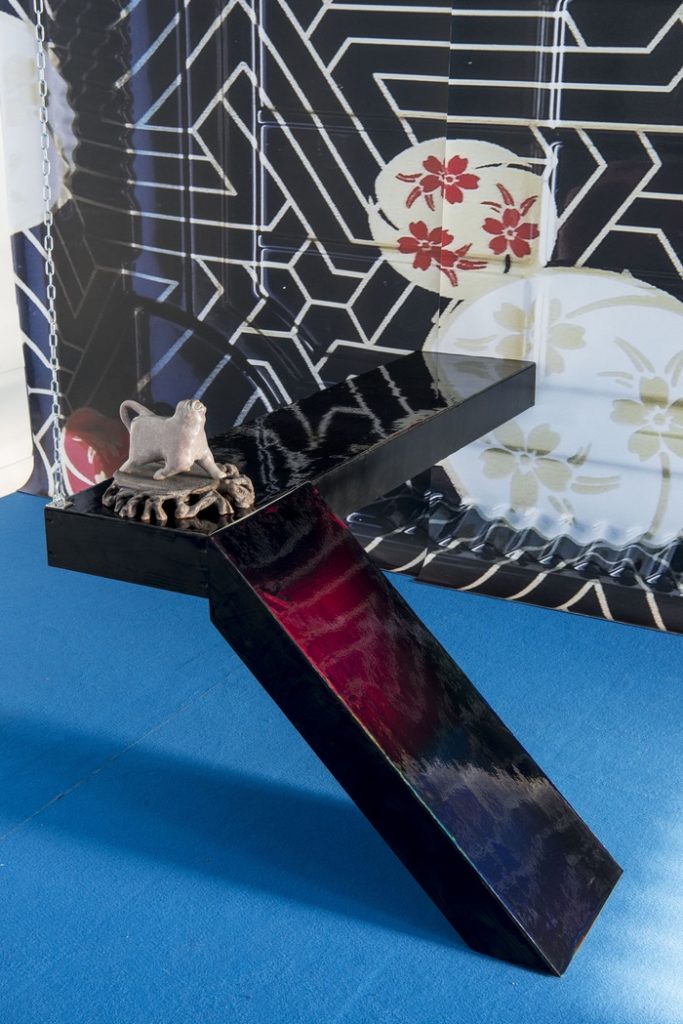
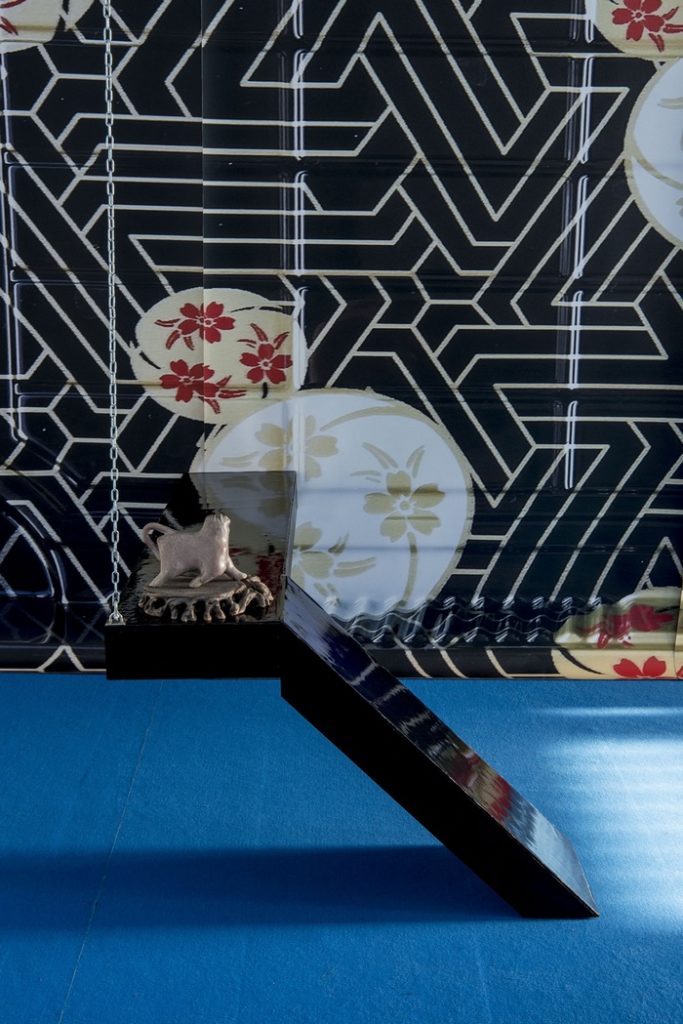
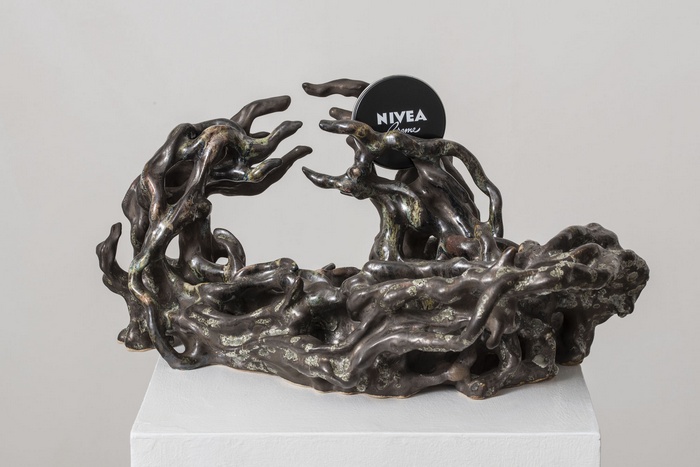
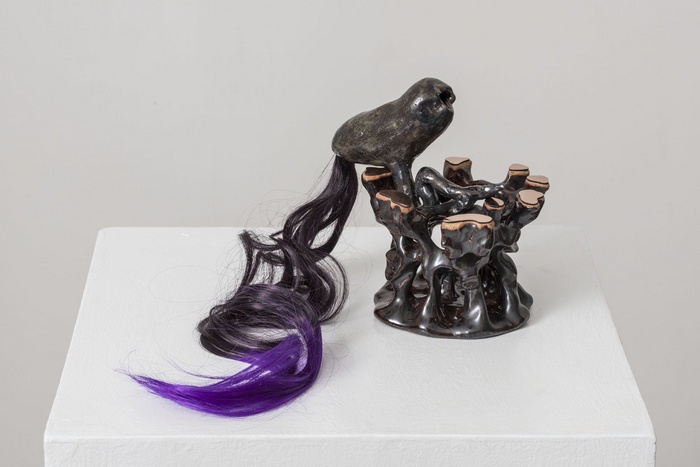
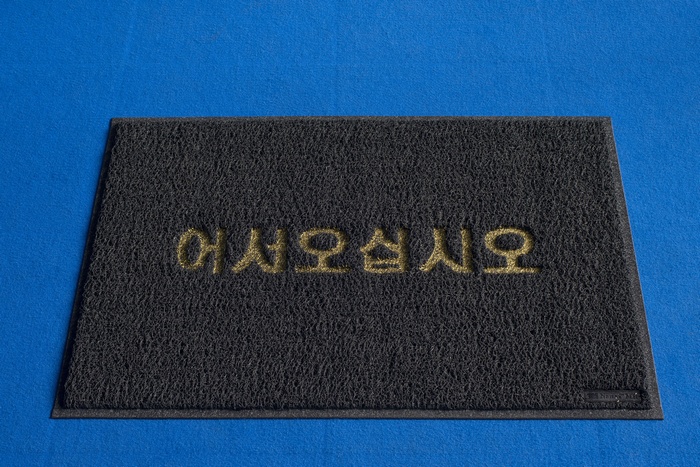
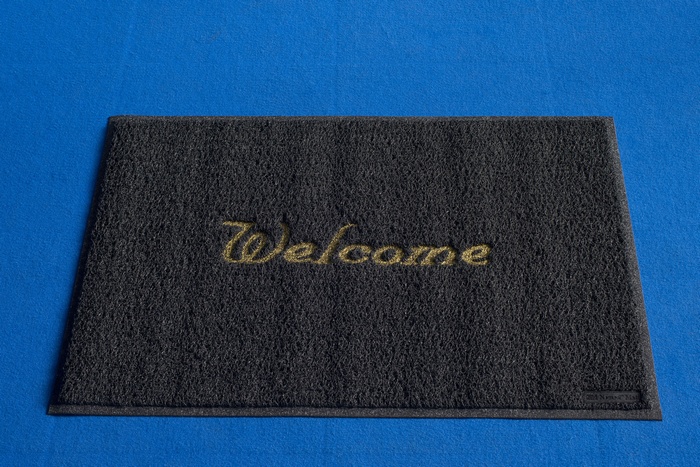
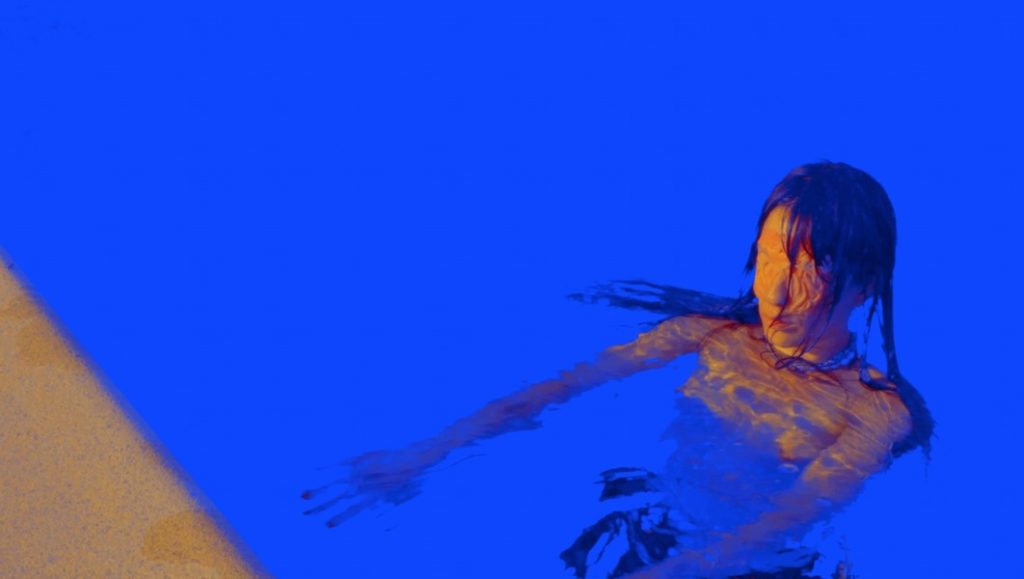
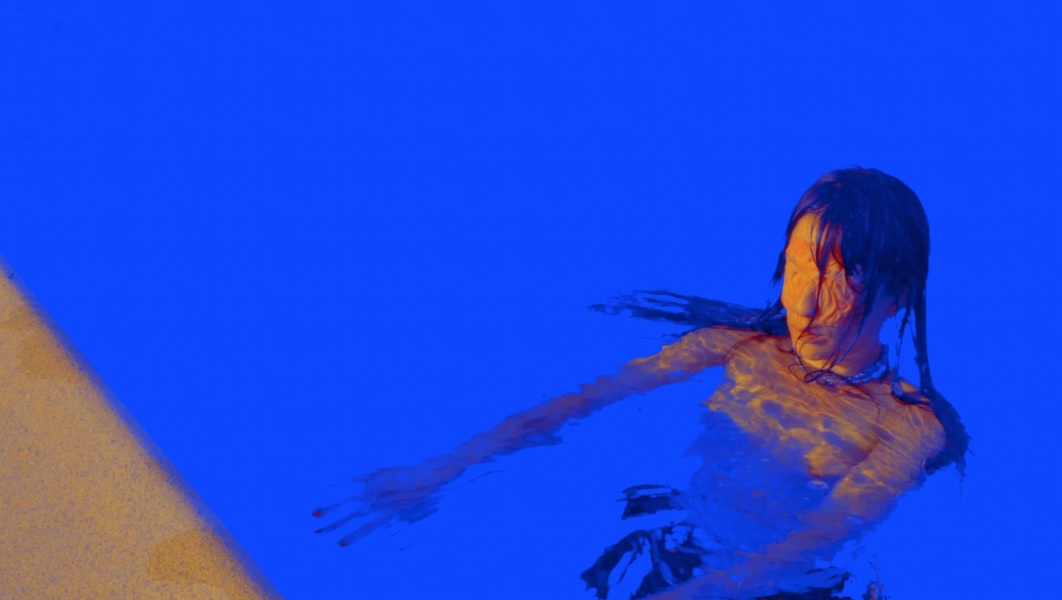
‘Shadow rift’ welcomes the visitors with a doormat typical of South Korea, which is usually placed outside or inside the doorway of a house or a building in order to allow people to clean the sole of footwear before entering a place. The invitation to perform a ritualistic gesture, a ceremonial custom, serves as the introduction to an exhibition that collects every aspect of a private world. Once inside, the visitor is overwhelmed by a protective atmosphere where a series of messages, symbols and objects universally recognizable are kept.  To welcome the visitor there is a mobile shield, symbolically representing an immune subject, visual result of the achievement of a possible stage of digital cleaning and personal privacy. The prevailing blue colour of the installation is a sample of the distinctive blue pot of the Nivea creme. The well-known ‘snow-white’ crème, having special functions that allowed to keep the skin as white as alabaster, obtained a sudden success as it could also be stored for a long period of time. In the work of Sinae Yoo, the cosmetic product acquired a metaphorical relevance since it is acknowledged in unison as one of the oldest product of the German mass product, although it dates back to the Nazi regime, when it was defined as the ‘Jewish crème’ because the Chairman of the Board of Directors of Beiersdorf, where the lotion was produced, was  Jewish. For some evident historical references, it is possible to start an antithetical reflection between antigen and antibody, internal and external, friends and foes, I and the other, pure and impure, negativity and positivity. A collection of sushi-boxes, featuring ‘embryonic’ creatures made of ceramic , clearly unravels the issue of packaged  food, through the use of perfect and eye-catching  incubators, in order to reassure the consumers: it is a formal statement against the question of the aesthetic  similarity of commercial mass products. On the other hand, the drawings aim at investigating the relationship, generally problematic, between the social and biological sphere. A further installation consists of a series of columns containing surveillance cameras, covered with a semi-transparent fabric, aimed at highlighting the impossibility of clarity in interpersonal relationships. Indeed, according to a totally Freudian vision, human existence is not limpid even to itself and such lacuna has an effect also on the relationship with the other. On the lower floor of the gallery, decorated with Nivea crème tins, there is the video ‘The Dead by Many Firsts’ (2016), accompanied by a soundtrack purposely composed for the video, where a blind girl swims in bluescreen-like water: it is the ghost of the ghost who lives in a status of deification of his own mental hygiene and who tries narcissistically to boost, with regard to healthiness, the image that the others can have of himself, through the use of an adaptable mimic and of protective models of the screen lock. Moreover, the video seeks to explore the concept of cyber-hygiene, in the 21st century, along with its multiple meanings not of immediate understanding. In this respect, indeed, quoting the British journalist Ben Hammersley: «The most important life skill we’ll be teaching our children over the coming decades will be cyber-hygiene. Fighting infections in the 21st century is less about washing your hands and more about not clicking on untrusted email attachments. Those of us who don’t understand this will be shunned as digitally unclean». *

During the opening, the exhibition will feature a live act by the young German performer and choreographer Nils Amadeus Lange. He will make a one to one performance exploring different forms of intimacy & hygiene with Nivea cream based on Sinae Yoo’s video ‘The Dead by Many Firsts’ (2016).

https://www.theguardian.com/technology/2013/jun/16/future-of-behaviour-concepts-for-21st-century

The Gallery Apart è lieta di annunciare Shadow rift, la prima mostra personale in galleria di Sinae Yoo, a cura di Domenico de Chirico.

Una libera e vivida interpretazione di situazioni, oggetti, figure e un complesso linguaggio di segni all’interno della cultura pop e ancora estesi scambi culturali che si muovono attraverso composizioni e motivi storici, che presentano le nozioni di un sé espressivo; questo è il punto di partenza del lavoro dell’artista coreana Sinae Yoo (*1985). Attualmente di stanza in Svizzera, per la sua prima mostra personale in Italia presso The Gallery Apart ha prodotto una nuova grande serie di lavori, quali un video con colonna sonora, installazioni, disegni e ceramiche.

Con ‘Shadow rift’, Sinae Yoo cerca di decostruire il senso privilegiato dalla theoria occidentale: la vista. Vedere non è esclusivamente vedere poiché ogni sguardo necessita di un occultamento. Tale modo di procedere, di stampo tipicamente derridiano, fa sì che la riflessione sulla vista, sulla visione, sullo sguardo e sull’occhio s’intrecci indissolubilmente col tatto: «Se due sguardi si guardano negli occhi, si può dire che in quel momento si toccano?».

Visione e tattilità, distanza e prossimità s’incrociano dunque come un chiasmo e il con-tatto degli occhi si dà come condizione affinché ci siano contemporaneamente lo sguardo e l’incontro con l’altro. L’essenza di questo discorso è indubbiamente di natura etica: Sinae Yoo indaga il modo d’essere e la capacità di porsi di fronte all’altro. Questa teoria oculare si risolve, per così dire, in un’impasse tecnologica: la visione si fa tatto e lo sguardo diventa contatto. Pertanto, il rapporto con l’altro decostruisce il movimento tra prossimità e distanza, la loro presunta dualità e la loro nitida separazione. Nella vicinanza estrema l’occhio non vede più, punta e tocca come un dito ed è così che la sua funzione, in ultima istanza, diventa digitale, non più ottica ma aptica (processo di riconoscimento degli oggetti attraverso il tatto). Si vuole così sottolineare un rapporto nuovo, ricostruito e attualizzato con la vista e con l’apertura degli occhi sul mondo. Per dirla con il filosofo francese Jean-Luc Nancy, «bisogna toccare senza toccare, cioè saper toccare senza toccare, senza troppo toccare».

All’interno della mostra, ricca di sinestesie, la riflessione sullo sguardo diventa anche una questione d’identità che si concretizza e si formalizza integrandosi con le distanze tipiche dello spettrale, immateriale e farmaceutico cyberspazio: qui è possibile baciarsi a distanza.

‘Shadow rift’ dà il benvenuto con uno zerbino tipico della Corea del Sud, il quale è solitamente posizionato fuori o dentro l’ingresso di una casa o di un edificio, per consentire alle persone di pulirsi le suole delle scarpe prima di entrare. L’invito a compiere un gesto ritualizzato, una consuetudine cerimoniale, vuole fungere da introduzione a una mostra che colleziona tutti gli aspetti di un mondo privato. Una volta dentro, lo spettatore viene sopraffatto da un’atmosfera protettiva in cui si conservano una serie di messaggi, simboli e oggetti universalmente riconoscibili. Ad accogliere c’è un paravento mobile, inteso simbolicamente come un soggetto immune, risultato visivo del raggiungimento di un possibile stadio finale di pulizia digitale e di privacy personale. Il blu che padroneggia su questo lavoro installativo è esattamente un campione di blu Nivea. Questa nota crema ‘bianca come la neve’, candida e dotata di particolari funzioni che permettevano di mantenere sempre la pelle di color alabastro, ottenne un successo subitaneo anche perché poteva essere conservata per lunghi periodi. Questo prodotto cosmetico ha acquisito nel lavoro di Sinae Yoo una rilevanza metaforica poiché è riconosciuto all’unisono come uno dei più longevi del mercato di massa tedesco, seppur riconducibile ai tempi del regime nazista, periodo in cui venne definito come la ‘crema degli ebrei’ poiché ebreo era il presidente del consiglio di amministrazione della società Beiersdorf nella quale veniva prodotta.

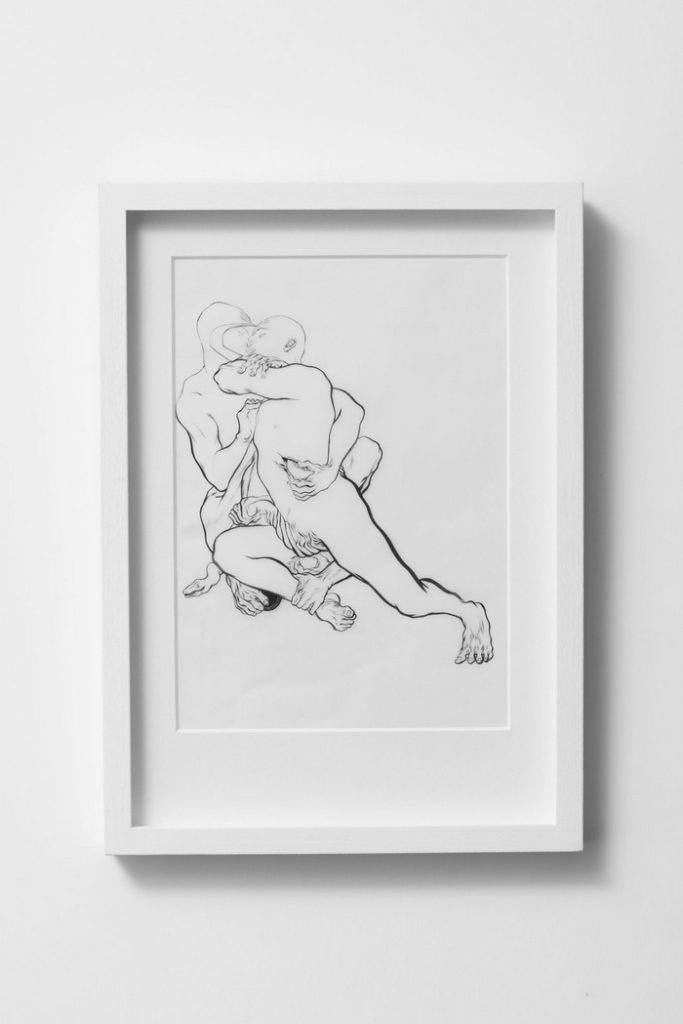
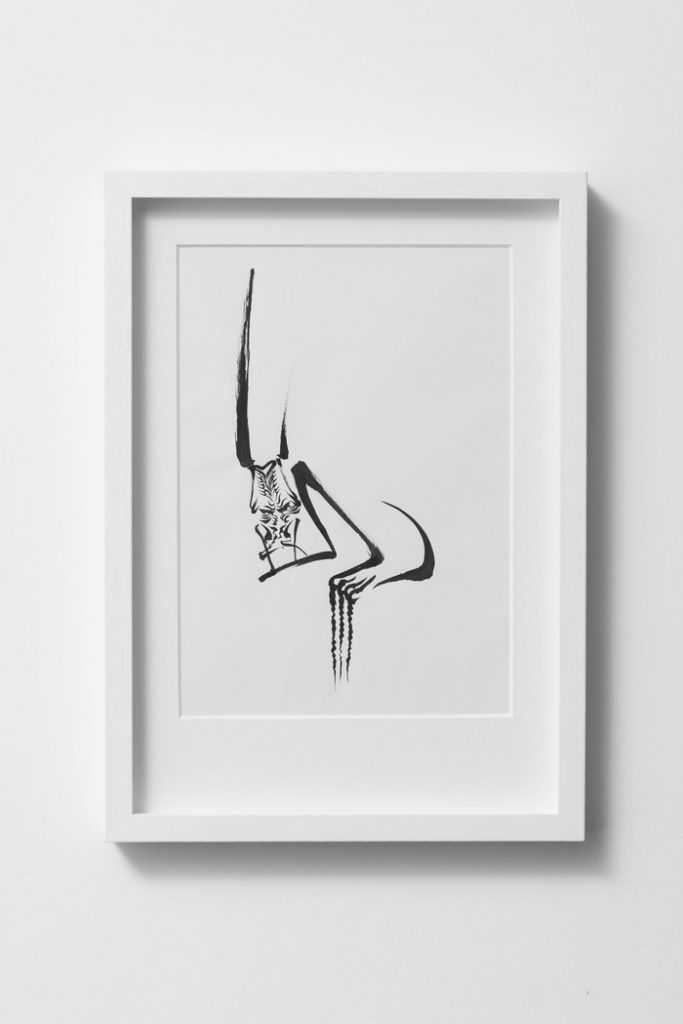
Qui, per chiari rimandi storici, è possibile cominciare una riflessione sulla differenza antitetica tra antigene e anticorpo, interno ed esterno, amici e nemici, io e l’altro, puro e impuro, negatività e positività. Alcune sushi-boxes, arricchite da creature ‘embrionali’ fatte di ceramica, dipanano chiaramente la questione del cibo confezionato, mediante l’utilizzo di perfette e accattivanti incubatrici, al fine di rassicurare il consumatore: è una presa di posizione formale che si schiera contro la questione della somiglianza estetica dei prodotti a livello commerciale. Invece, i disegni esposti sono volti a indagare il rapporto, generalmente problematico, tra la sfera sociale e quella biologica. Un’altra installazione è costituita da una serie di pilastri che contengono telecamere di sorveglianza, coperte da tessuto semi-trasparente, volte a evidenziare l’impossibilità di chiarezza nei rapporti interpersonali. Infatti, secondo una visione del tutto freudiana, l’esistenza umana non è limpida neanche a se stessa e tale lacuna si ripercuote anche nel rapporto con l’altro.

Il piano inferiore della galleria, adornato da barattoli di crema Nivea, ospita il video ‘The Dead by Many Firsts’ (2016), corredato da una colonna sonora realizzata ad hoc, in cui una ragazza cieca nuota in un bluescreen-like water: si tratta del fantasma di un fantasma che vive in uno stato di deificazione della propria igiene mentale e che tenta narcisisticamente di potenziare, in quanto a sanità, l’immagine che gli altri possono avere di se stessi, mediante l’utilizzo di una certa mimica adattabile e di modelli protettivi e di blocco dello schermo.  Inoltre, il video tenta di esplorare il concetto di cyber-hygiene, nel corso del XXI secolo, con i suoi molteplici significati non d’immediata comprensione. A tal proposito, infatti, secondo il giornalista britannico Ben Hammersley: «The most important life skill we’ll be teaching our children over the coming decades will be cyber-hygiene. Fighting infections in the 21st century is less about washing your hands and more about not clicking on untrusted email attachments. Those of us who don’t understand this will be shunned as digitally unclean». *

La mostra sarà corredata, durante l’opening, da un live act del giovane performer e coreografo tedesco Nils Amadeus Lange che darà vita a una one to one performance per esplorare differenti forme di intimità & igiene con l’uso di crema Nivea ispirandosi al video di Sinae Yoo ‘The Dead by Many Firsts’ (2016).

https://www.theguardian.com/technology/2013/jun/16/future-of-behaviour-concepts-for-21st-century